
“Some things don’t change,” Stephanie remarked.
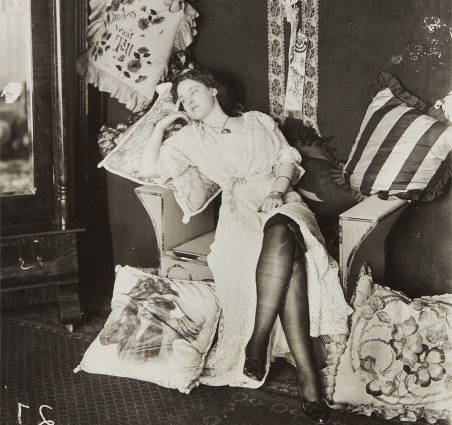
She had just returned from a trip to New Orleans. She had toured Storyville, the city’s red-light district in the early 20th century. Among the historical items she encountered were guidebooks which included advertisements for prostitutes and descriptions of services offered.
Long before Eros or The Erotic Review, printed media were employed in the service of sexual commerce. In 18th-century London, Harris’s List of Covent Garden Ladies was an annual directory of sex workers for a clientele that included James Boswell, Robert Walpole, and the Prince of Wales. It was published around Christmas and sold for two shillings and sixpence. One contemporary report estimated that 8,000 copies were sold each year. Historian Kate Lister writes, “[T]he list detailed the appearance, skills, and prices of up to two hundred women selling sex in the capital….As you may well imagine, Harris’s List was a hugely popular work. As well as being a practical resource, the list also provided titillation. As Delinger notes, the list functions in two ways: ‘names, addresses, and prices all point to their practical use, while the lush descriptions of women also function as soft-core pornography.’”

Here is the description for one “Jenny Nelson, St Martins Lane”:
A jolly smart wench, a good companion at table; but particularly joyous in bed; there are few whores to be found so generous as she is, often restoring the money when she likes her man.
The British period drama Harlots features a scene in which the ladies read their reviews in Harris’s List. A review describing one Emily Lacey as a “young votary of Venus” propelled the noted courtesan to a more elite brothel.
 Lutheran Guilt