

“I watch Sex and the City, and I’m like, those whores!”
The serial sexcapades of the protagonists on Sex and the City elicited that reaction from a young New York professional. A minister’s assessment wasn’t much more positive: “Sex and the City is the iconic text of an age in which sex is everything…. the civitas diaboli of Carrie and company.” In contrast, Christianity Today (of all outlets) gave the film adaptation a positive review: “But it was refreshing to have a single woman’s sexuality acknowledged. In stark contrast, the last time anyone in a Christian setting spoke to the fact that I’m a sexual human being was in a college church group, where I was blithely instructed that ‘true love waits.’ Well, 15 years later, it’s still waiting.” (The critic sounded bitter that she hadn’t yet gotten laid.)
It’s hard to imagine Carrie and company pulling off their exploits in Peoria. I grew up in a small city in the American West and attended college in a relatively rural area. When I moved to New York after college, I was overwhelmed by the sexual energy crackling in the Erotic City. “The city is a sexual jungle, a Babylon of licentiousness and unnatural vice in which anything goes,” Elizabeth Wilson writes in The Contradictions of Culture: Cities, Culture, Women.
New York City is all about sex. No wonder the city never sleeps. It’s too busy trying to get laid.
Carrie Bradshaw
The more provocative dress of young urban women was immediately apparent to me — tall models strutting down Fifth Avenue in miniskirts and fuck-me pumps are hard to ignore. Despite intermittent recommitments to purity (one of the explicit conditions of the parish I served at was that I would refrain from sexual activity), the bountiful selection of escorts online proved irresistible. A memorable encounter was in Midtown with “Jacqueline,” an attractive brunette in her forties. I had arrived at her apartment directly from church. She had been an aspiring actress who, in her words, “didn’t make the audition” on Broadway. She had had ample opportunity to perfect her talents in bed, however, for after she got me naked, she got down on her knees, expertly placed a condom in her mouth, and slipped it on me. Then I took her from behind as she urged me on: “Come on, fuck me, fuck me harder.” Working up a sweat in her apartment as the city bustled around us, it confirmed Matt Houlbrook’s observation, “In modern times, the association between sex and the city has become almost axiomatic.”
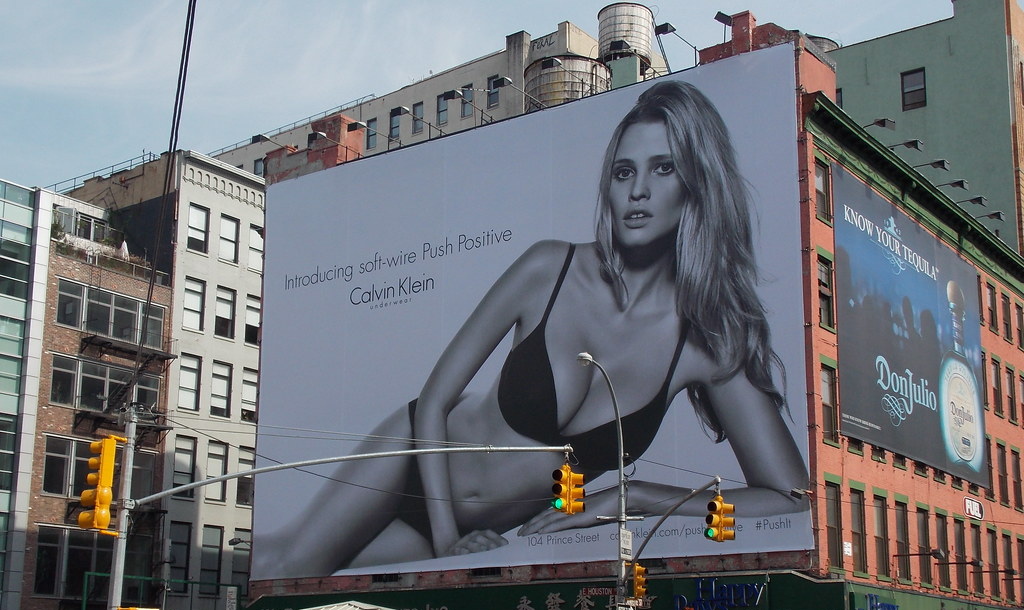
That should come as no surprise. Sociologists in urban studies have demonstrated that sexually is spatially constructed. That is, sexual practices are shaped by the physical and cultural forms of modern life. In Hypersexual City, feminist scholar Nicole Kalms observes contemporary commercial urban culture, writing, “Hypersexualized representations of women increasingly pervade urban spaces.” A recent visit to Times Square confirmed that. Augustine in De Civitate Dei wrote, “Lust requires for its consummation darkness and secrecy.” The city provides cover for sex. Houlbrook writes that “the apparent anonymous and atomized qualities of urban life, the sheer size of the metropolis” erode the social boundaries that can inhibit sexual behavior. The greater freedom cities offer as compared to traditional rural communities enables a diversity of sexual spaces, both physical (i.e. red-light districts) and conceptual. “In Sex and the City, one of the consistent themes is that each of us decides what sex will be for us, such that sexuality is the medium for self-actualization,” writes David Matzko McCarthy. Sexual expression thus becomes “a basic means of self-expression.” The city is the setting where this quest for sexual identity occurs. One scholar says that “the city has become a sign of desire: promiscuity, perversion, prostitution, sex.”
 Lutheran Guilt