
It’s May, it’s May, the lusty month of May! That lovely month when everyone goes blissfully astray.
Camelot
The month of May derives its name from Maia, a nymph in Greco-Roman religion. According to the Homeric Hymns: “Maia bare, the rich-tressed nymph, when she was joined in love with Zeus….And the purpose of great Zeus was fulfilled.”
Springtime is an aphrodisiac.
Now is the month of maying,
English Ballad by Thomas Morely (1595)
When merry lads are a playing,
Each with his bonny lass
Upon the greeny grass.
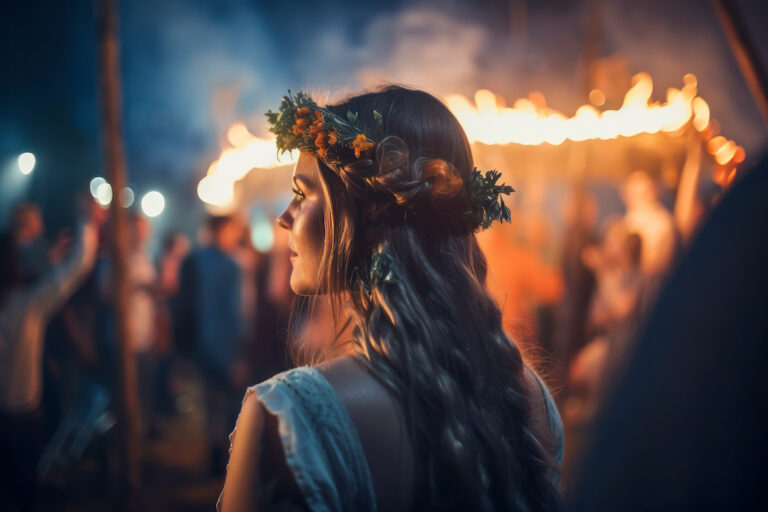
Ancient May Day festivals are said to have been orgiastic. Young men and women copulated in nature to ritually fertilize the fields (and to biologically fertilize the young women). The maypole is an obvious phallic symbol, a representation of the divine phallus plunged into Mother Earth to fertilize her womb. (It’s sexual symbolism led dour English Puritans to ban it during the Interregnum.)
Beltane was an ancient Gaelic festival which falls between the spring equinox and summer solstice which celebrated fertility. Wiccans and other neopagans mark it as an observance of the sexual union of god and goddess which fecundates nature. One self-proclaimed witch enthuses, “Celebrations include the obvious pleasures of sexual coupling!” Some engage in the “Great Rite in Truth”: the uniting of man and woman in ritual sex.
Oh, do not tell the Priest our plight,
   Or he would call it a sin;
But - we have been out in the woods all night,
   A-conjuring Summer in!

—Rudyard Kipling, "A Tree Song" (1906)
 Lutheran Guilt